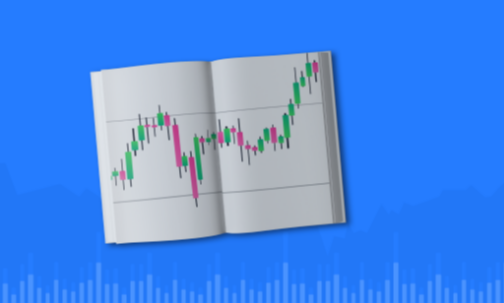
Crypto charts distill price action into actionable signals. Track candles, trends, and momentum across timeframes to identify structure, support, and resistance. Use indicators to quantify velocity and volatility, then seek cross-timeframe confirmation to reduce false signals. Maintain a practical checklist: precise stops, favorable risk-reward, disciplined sizing, and pre-trade checks. The framework is methodical, data-driven, and ready to test; the next step reveals how to apply it in real trades.
What Crypto Charts Tell You at a Glance
Crypto charts distill market activity into visual signals that convey direction, momentum, and volatility at a glance.
The summary focuses on distribution of price, volume, and timing, revealing short-term coherence and structural shifts.
readers assess chart psychology and risk metrics through pattern recognition, support/resistance, and relative strength.
This framework supports independent decision-making and disciplined risk management for freedom-minded traders.
Read Price Action: Candles, Trends, and Momentum Signals
Price action distills price movement into discrete, interpretable signals that traders use to gauge momentum, trend strength, and potential reversals. Read price action through candles to identify immediate structure, then assess trends across timeframes. Momentum signals emerge from price gaps, wicks, and body size, guiding entries and exits with disciplined risk. Candles, price action, trends, and momentum signals define practical market interpretation.
Read also: How to Pitch a Crypto Startup
Spot Patterns, Indicators, and Confirmation Tools to Trust
Spot patterns, indicators, and confirmation tools provide a structured framework for validating market signals and reducing false positives. They quantify momentum, volatility, and trend strength, enabling objective decisions. Traders apply risk management thresholds and confirm signals across timeframes to avoid overfitting.
Awareness of trade psychology cushions discipline, preventing impulsive exits or hesitations that undermine systematic analyses and compromise planned risk controls.
Build a Practical Chart-Reading Checklist for Trades
A practical chart-reading checklist translates signals into repeatable actions by outlining essential criteria traders should verify before entering, exiting, or adjusting positions.
The checklist focuses on risk management, clearly delineating stop placement, risk-reward ratio, and position sizing.
It also addresses trade psychology, documenting pre-trade conditions, bias checks, and decision timestamps to reduce impulsive moves and preserve disciplined, freedom-enabled execution.
Frequently Asked Questions
How Do I Choose the Right Time Frame for Charts?
The right time frame depends on objectives; the author notes timeframe selection hinges on trade horizon and risk tolerance. Short-term traders favor intraday charts, while long-term holders use multi-week vistas to enhance chart pattern recognition and decision clarity.
What Are the Risks of Relying on Indicators Alone?
The risks of relying on indicators alone include potential chart overreliance, data gaps, and liquidity issues, which can distort decisions; risk indicators may mislead without corroborating context, underscoring the need for diversified analysis and risk-aware judgment.
Can Volume Alone Predict Future Price Movements Reliably?
Volume alone cannot reliably predict future price movements; volume validity and liquidity interpretation must be integrated with other indicators to assess potential trends, as data quality and market context determine predictive value and signal robustness.
How Do I Manage Chart Data Gaps and Liquidity Issues?
“Steam-powered dashboards” illustrate that chart data gaps can be mitigated by data normalization and robust liquidity sourcing. The approach discovers missing ticks, flags anomalies, and applies interpolation with transparent assumptions to preserve analytic integrity and flexible decision-making.
What Beginner Mistakes Should I Avoid When Reading Charts?
Avoiding bad habits and recognizing data biases are essential. A cautious reader discerns sample bias, survivorship, and look-ahead errors, validating with multiple timeframes, volumes, and exchange feeds while resisting overfitting to noisy, short-term patterns for freedom in analysis.
Conclusion
Crypto charts reveal a hyper-accelerated map of market psychology. Candles explode with instant zeal, trends roar in on disciplined lines, and momentum shouts in noisy oscillations. Patterns kaleidoscope into probabilistic bets, while indicators tag risk and confirm strength. A lean checklist—precise stops, favorable R‑R, size discipline, pre-trade checks—transforms chaos into actionable clarity. When timeframes align, signals converge from multiple angles, delivering a rigorously data-driven, almost scientific edge for disciplined traders navigating volatile crypto seas.